Classical architecture refers to the styles and principles of building that originated in Ancient Greece and Ancient Rome. It is defined by its adherence to symmetry, proportion, and a specific "vocabulary" of structural and decorative elements, most notably the Classical Orders of columns.
The Five Classical Orders
The "Orders" are standardized styles that determine the design of columns and the horizontal structures (entablatures) they support.
Designing Buildings
Designing Buildings
+1
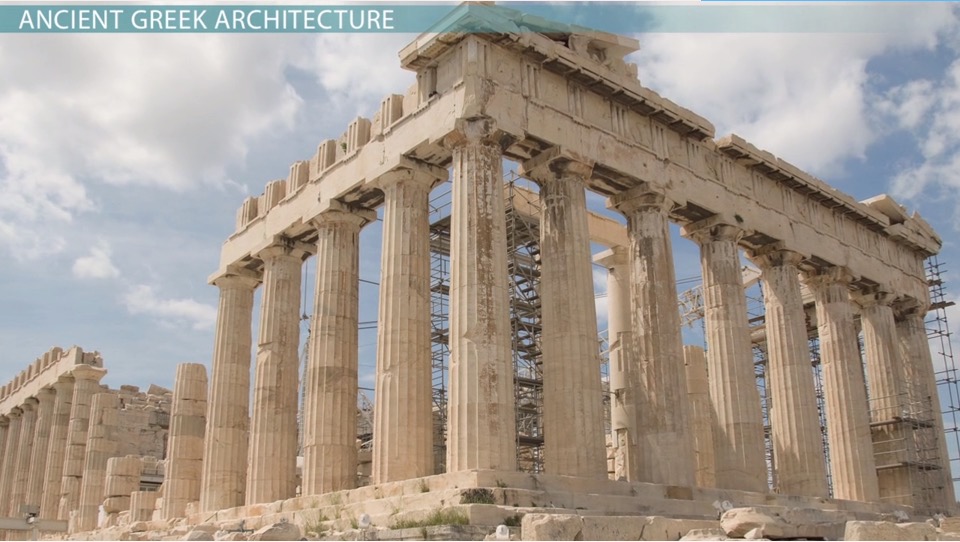
Doric: The oldest and simplest Greek order, featuring sturdy, fluted columns with no base and a plain capital.
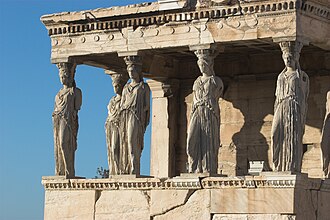
Ionic: More slender and elegant than Doric, identifiable by its scroll-like ornaments called volutes at the top.
Corinthian: The most ornate Greek order, characterized by capitals decorated with intricate acanthus leaves.
Tuscan: A Roman simplification of the Doric order, featuring a smooth, unadorned shaft and a simple base.
Composite: A Roman creation that blends the Ionic and Corinthian styles, featuring both floral leaves and scroll designs.
The Spruce
The Spruce
+3
Core Principles
Classical architecture is governed by the Vitruvian Triad, established by the Roman architect Vitruvius, which states that every building should possess three qualities:
EBSCO
EBSCO
+1
Firmitas (Strength): Structural integrity and durability.
Utilitas (Utility): Practicality and functionality for its users.
Venustas (Beauty): Aesthetic appeal achieved through mathematical harmony.
Architects often use the Golden Ratio to determine ideal proportions, believing that mathematical relationships found in nature and the human body create the most pleasing visual balance.
Study.com
Study.com
+1
Key Architectural Elements
Pediment: The triangular gable at the top of a building's front, often decorated with sculptures (reliefs).
Entablature: The entire horizontal section resting on the columns, consisting of the architrave, frieze, and cornice.
Symmetry: Buildings are typically designed with perfectly balanced left and right halves, creating a sense of order and calm.
Durable Materials: Traditional classical structures use lasting materials like marble, limestone, brick, and concrete (a Roman innovation).
The Spruce
The Spruce
+4
Notable Examples
The Parthenon (Athens): A definitive example of the Doric order, dedicated to the goddess Athena.
The Pantheon (Rome): Famous for its massive concrete dome and Corinthian portico.
The Colosseum (Rome): Showcases the Roman use of arches and vaults to create massive public spaces.
Modern Reinterpretations: This style was revived during the Renaissance and the Neoclassical period (1750–1900), influencing iconic buildings like the U.S. Capitol and the U.S. Supreme Court Building.